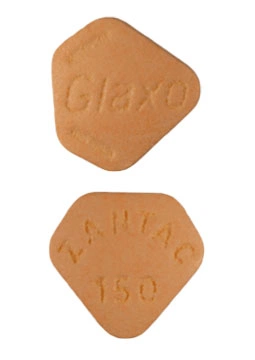
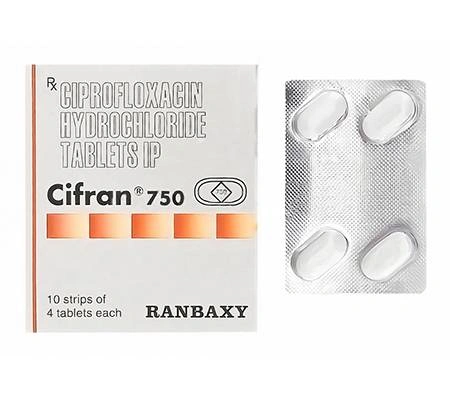
Zantac is a blocker of H2-histamine receptors. The mechanism of action
consists in the blockade of histamine H2-receptors of parietal cells in
gastric mucous layer. This medication suppresses day and night secretion
of HCl (both basal and stimulated), reduces the amount of gastric
juices caused by stretching of the stomach with food load and by the
action of hormones and biogenic stimulants such as gastrin, histamine,
acetylcholine, pentagastrin, caffeine. Zantac reduces the amount of HCl
in gastric juice almost without suppressing "liver" enzymes associated
with cytochrome P450. It does not affect the concentration of gastrin in
plasma, production of mucus. Zantac reduces pepsin activity. This
medication is used to treat and prevent stomach and duodenal ulcers,
gastrointestinal disorders caused by NSAID, heartburn, hypersecretion of
gastric juice, symptomatic ulcers, ulcers caused by stress, erosive
esophagitis, reflux esophagitis, Zollinger-Ellison syndrome and other
conditions.
Dosage and direction
Take
it orally with or without food. Correction of the dose should be made
for patients with significantly abnormal liver or kidney function.
Besides tablets this medication maybe administered intramuscularly (IM)
or intravenously.
Precautions
The
Zantac effervescent tablet may contain phenylalanine. Notify your doctor
if you are pregnant, plan to become pregnant or breastfeeding before
taking Zantac. Risk of developing pneumonia may be increased by this
medication.
Contraindications
Hypersensitivity, breastfeeding. For patients with liver of kidney
failure, cirrhosis of the liver, acute porphyria (also in history),
children younger than 12 y.o., pregnancy this medication should be
administered with cautiousness.
Possible side effect
Besides possible allergy (hives, rash, swelling most common side
effects of Zantac are constipation, diarrhea, fatigue, headache,
insomnia, muscle pain, nausea, and vomiting. Rare more serious side
effects are agitation, anemia, confusion, depression, easy bruising or
bleeding, hallucinations, hair loss, irregular heartbeat, visual
changes, jaundice.
Drug interaction
Antacids may decrease the absorption of Zantac, so their intake should
be separated by 1-2 hours. Alcohol levels may increase if Zantac is
taken simultaneously. This medication also increases the area under the
plasma concentration time curve (AUC) and concentration of Metoprolol in
blood serum, slows absorption of itraconazole and ketoconazole.
Missed dose
If you missed a dose take it as soon as you remember, but not if it is
almost time of the next intake by your schedule. If so, skip the missed
dose. Do not try to compensate a missed dose by taking an extra one.
Overdose
If you suspect that you took too much of the medication seek for
immediate medical attention. Symptoms of overdose include lack of
coordination, feeling light-headed, or fainting.
Storage
Save Zantac in a dry place away from sunlight at room temperature between 15-30 C (59-86 F).
Disclaimer
We provide only general information about medications which does not
cover all directions, possible drug integrations, or precautions.
Information at the site cannot be used for self-treatment and
self-diagnosis. Any specific instructions for a particular patient
should be agreed with your health care adviser or doctor in charge of
the case. We disclaim reliability of this information and mistakes it
could contain. We are not responsible for any direct, indirect, special
or other indirect damage as a result of any use of the information on
this site and also for consequences of self-treatment.